


My Next Research Challenge: Building a Smart Insole for Stroke Rehabilitation
The Idea
Stroke patients often experience pressure imbalance when walking, which can slow recovery and increase the risk of falls. My project focuses on designing a smart insole that can detect uneven pressure distribution between the left and right sides of the body and provide real-time feedback during rehabilitation.
The goal is simple but powerful: help patients become aware of imbalance as it happens, so they can correct it safely and gradually.
From Code to Hardware
This project is pushing me beyond software into embedded systems and mechatronics. I’m working hands-on in a lab environment to:
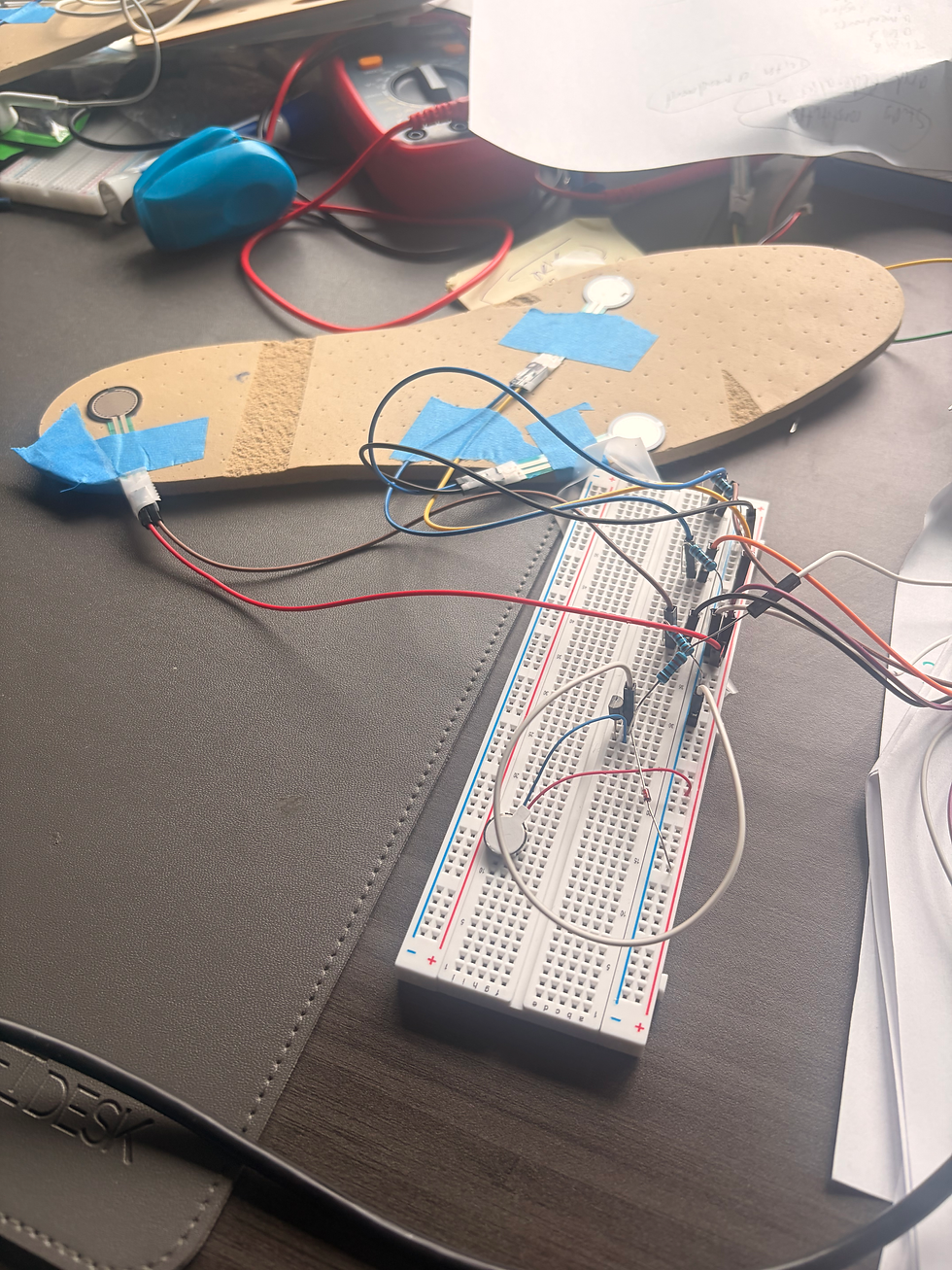
Integrate pressure sensors into an insole
Use microcontrollers to collect real-time data
Experiment with sensor placement to maximize accuracy
Extract and analyze data using MATLAB

It’s my first time building something that has to physically interact with the human body — which adds an entirely new layer of design constraints and responsibility.
Real-World Testing
Once the prototype is stable, I plan to move into initial trials at my grandmother’s care home. This step is especially meaningful to me, because it grounds the research in real people and real needs — not just lab benchmarks.
Closing the Loop: Haptic Feedback
The final phase of the project will focus on gentle haptic feedback. When the system detects a pressure imbalance, the insole will provide subtle cues to help the wearer adjust posture or gait without being distracting or overwhelming.
Why This Matters to Me
This project brings together everything I love about engineering:
Hardware + software integration
Data-driven decision making
Designing for accessibility and rehabilitation
Turning theory into something that can directly improve someone’s quality of life
It’s still early, but this work is shaping how I think about my future — studying engineering and building technologies that sit at the intersection of health, accessibility, and human-centered design.


Comments